A story about a timely matter
13, November 2026
The poem explores the cost of humanity’s actions and the fragile, wordless bond that remains between humans and the wild.
It was a lovely and insightful sentence. There is no way Ethan, a tenth grader getting a C- in English, wrote it. The AI detector confirmed this: “100% of your text is likely AI generated; 35% is Identical; 25% Paraphrased AI; 40% Minor Changes; 0% human written text.”
Ethan, of course, disagreed with this assessment.
“I just used AI to ask if my quotes supported my commentary,” he said.
“Can you show me the ChatGPT history of how you wrote it?”
“No.”
“Well, how do you explain this evidence?”
“It’s wrong. And besides, didn’t you use AI to get that evidence? How is that not cheating? It doesn’t prove anything.”
I responded with impressive composure: “Just get out of my classroom. I can’t talk to you when you have this attitude.”
What began as a trickle a few years ago was now a tsunami, and I was drowning.
Ethan knew that AI detectors were considered unreliable evidence of AI use—students always know things like this—but the detector was the only tool I had to prove that he hadn’t written the paper. I knew that Ethan had cheated, and Ethan knew that he had cheated. It would be bad for him to get away with it—would make him even cockier and more disrespectful than he already was. Thankfully, the principal had my back. “This doesn’t sound like the way you write, Ethan. Unless you have a record of how you wrote it, you need to do a rewrite.” He never admitted he cheated, but he agreed to a rewrite.
I have never gotten a false positive when I used AI to prove that a paper was written with AI. After students are confronted with the proof, they ultimately either admit they have used it or agree to a rewrite, something they would never do if they hadn’t cheated. I do, though, sometimes get what I believe to be a false negative. When I scan a paper I suspect and the detector says, “this text is likely human written,” my first thought is “Like Hell it is.” My second thought is “Thank God.” Without proof, I am off the hook. I don’t have to spend hours of my life talking to students, listening to their denials, reaching out to the principal, emailing the parents. Without proof, I can just grade the paper, take it at face value.
The next week, Josh, a senior, turned in a villanelle written in impeccable iambic pentameter. The rhyme and imagery were rather trite— “With hues of gold and crimson, pure delight/The day bids farewell, embracing the night”—but if he’d written it, he would have gotten an A. Of course he hadn’t. The report said, “90% of your text has signs of AI. Would you like to humanize your text?” This text had not been humanized.
Josh is a student I worry could end up in jail for white-collar crime. He is extremely smart and has a total disdain for rules. Every time he gets caught cheating, he apologizes and promises he’ll never do it again, but he shows no real remorse, and he always does it again.
He’d cheated so many times that he wouldn’t get a rewrite opportunity. He would have to take a zero. He pretended not to be bothered by this.
“I’m going to use AI in college too,” he said.
“Well, if you get caught, they could expel you.”
“What does it matter? By the time I graduate, all jobs are going to be done by AI anyway.”
I had no answer for this.
Despite his attitude of indifference, Josh wanted to graduate and he wanted to go to college. This zero was an obstacle. If he got another, if he cheated on his final paper, he would fail senior English. He needed to write it himself, and he needed to get at least a C.
When I graded the seniors’ final papers, a week before graduation, I read Josh’s first. I held my breath as I began, hoping for the best. I was thrilled when I finished. It didn’t meet the word count, was incorrectly formatted, and barely addressed the prompt—but it was moderately coherent, it was his original work, and it was a solid 70%. Josh would graduate.
I was not thrilled when I read the rest of the senior papers. A third of the class had used AI for significant portions. What should I do? Should I confront each of them? Listen to their denials? Call their parents? Involve the principal? Spend hours getting them to admit what they had done? There were no rewrite opportunities on final assessments, so I’d have to give them all zeros. Their grades would plummet. Some would fail the course. Some college acceptances would be rescinded. I didn’t want any of this to happen. It didn’t seem right. I wanted them to graduate, to go to college, to move on with their lives. But I couldn’t let them completely get away with cheating. This didn’t seem right either.
So, instead of confronting them, instead of telling the principal, instead of contacting their parents, I gave them all Cs. I knew if they had written the papers themselves my inbox would explode within minutes of entering the grades—their protests would be immediate and vociferous. If they had used AI, there would be no response. The silence would be definitive proof.
No one protested. They all took the C.
Julie Dearborn is a writer living in San Francisco, California. Her work has appeared in literary journals including Inlandia, Narrative Magazine, The Summerset Review, What We’ve Believed: 2023 San Francisco Writers Foundation Writing Contest Anthology (New Alexandria Creative Group, 2023), and The Party Train: A Collection of North American Prose Poetry (New Rivers Press, 1996). In her off-hours, she can be found hiking the coastal trails or reading and writing at one of the many outdoor cafés created during the pandemic.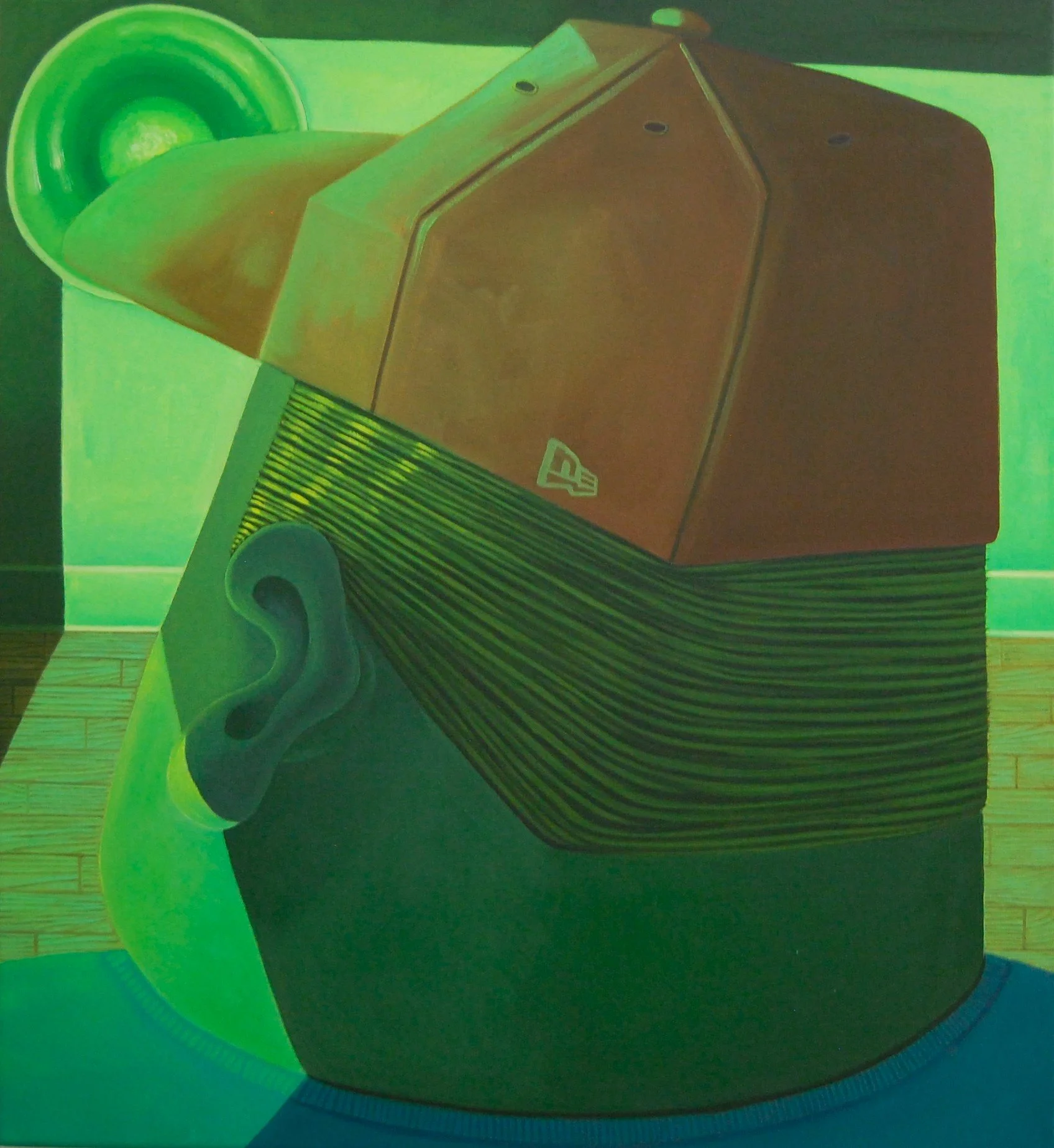
New Era by Brian Cirmo