Geographic Tongue — By Maggie Dillow
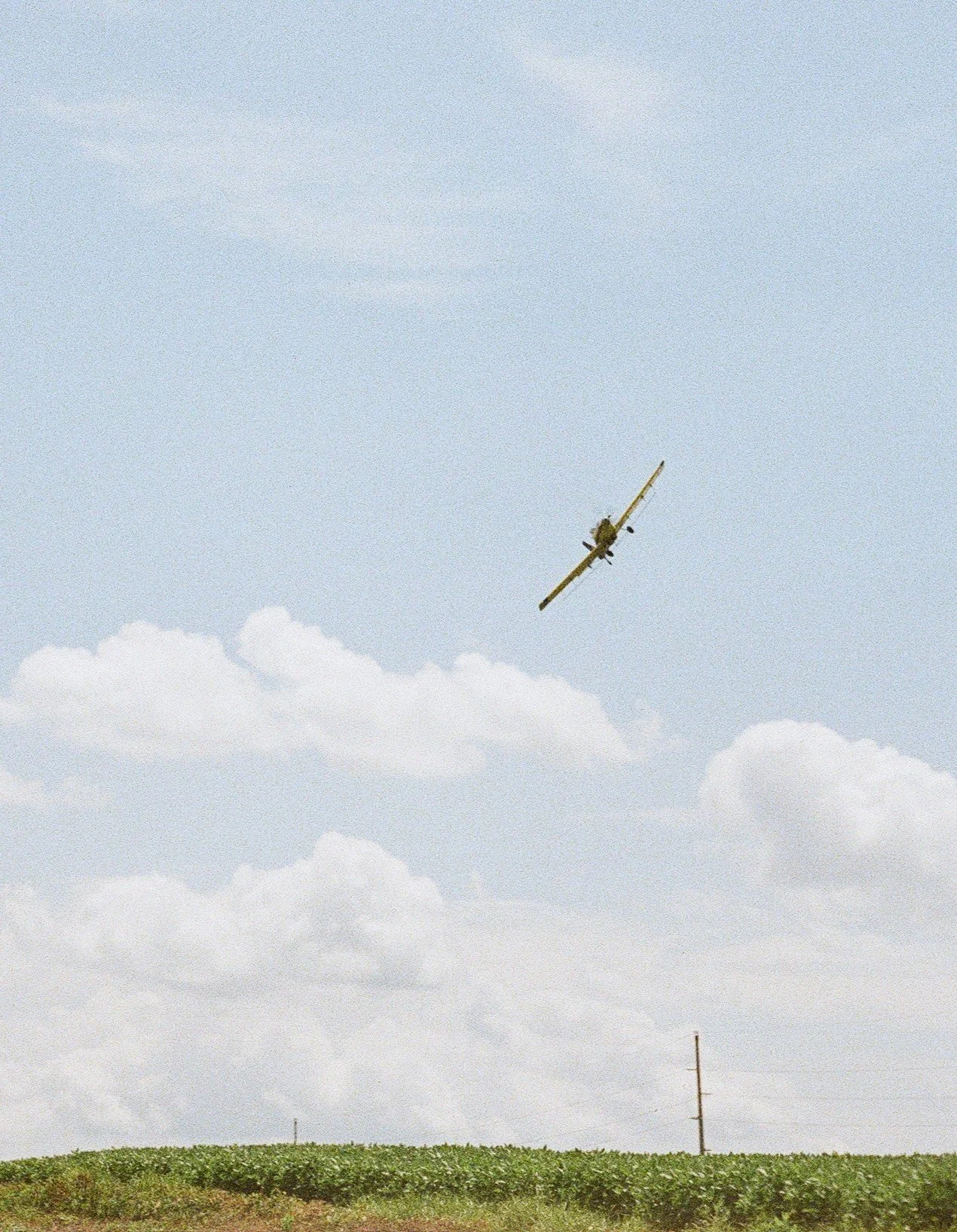
artwork by Dakota Duncan
In the woods, where we met, she wore a plaid tennis skort. Clutched a Big Gulp brimming with vodka and fruit. Called me Love without pity. Brought me to a blessing of her motorbike, where I rode on the back, my hands on her shoulders, where the pastor’s hand reached out and covered my left, where we bowed to any god, where we believed in ourselves only, our eyes closed.
Then, she took me to Canada.
The cabin had summer-walls.
I grasped the waist of flannel-lined trousers, wrenched layers of long-sleeved shirts above my head, arm joints forced perpendicular to my feet, warm and stratified by wool. The raw-edged bathroom mirror revealed breasts shrunken, sharpened by the autumn shore-winds, humming. My own hands bit at the rind of my midsection. Navel a deep, true hole, notched by dry rivulets the cold had somehow reached. It was October and I showered quickly. The water was straight from Rainy Lake and I was careful to not let any in my mouth. I stepped back into the room of autumn shore-winds. My feet like wax on the damp floor, osteal ridges pronounced by the narrowing of blood vessels.
Near the U.S. border the sky puffed full of factory clouds, thick as cement.
I looked up at the mirror.
My own face was there.
I was close-mouthed but knew how my tongue swelled, bloated and defiant against the walls of my teeth, its mauve, cool tones of frosted pink-blue gradations. The contours of countries and rivers spread easily across its surface, quarried and surprised. I wish I knew more right words for its anatomy. I think about it often and the nations there, empires harrowed by citric acid and spice. Your geographic tongue is prominent, according to the dentist. It’s my father’s tongue, I wanted to say, but didn’t. Ketchup is a kind of sweet that doesn’t gnarl its stressed buds, so I eat too much of it. Also, I’m from the suburbs. I see on its surface tiny countries, a menial conjuring of their shapes: Borders made by bodies that hate mine, maybe; there are always wars or else none, sometimes divinity; men.
We once went kayaking in the middle of the night, on a lake in the woods. The bright, sleek vessels strapped to the top of her tiny red hatchback via extension cords. The male plug dangling through the moonroof where I clutched it with both hands, white-knuckled over sleek black pavement.
Then, she moved to Australia.
At the Gold Coast Airport, she’ll marvel at my slightness. I’ve been pedaling everywhere, I’ll tell her, remembering how she would name a girl-child, Bicicleta. But here, now, when I play the piano, there, in Canada, rowing notes dark and clear through summer-walls, she doesn’t watch. She calls me Queen. She tells me I can go anywhere. My American-made mouth, a stuffed home, clutching anything that tastes.
Maggie Dillow is the founding member of the Post-apocalyptic Poets for a Pre-apocalyptic World, a collective dedicated to performance-based poetics, and podcast co-host of Girlhood Movie Database. Her work as a writer and educator has been supported by the Tiny Spoon Residency, the National Women's History Museum, and the NEH. She is the 2025 recipient of the Anne Spencer Memorial Award through the Poetry Society of Virginia and has an MFA from Hollins University. When she's not writing, you can find her in the woods.