Polished — By Jason Brandt Schaefer
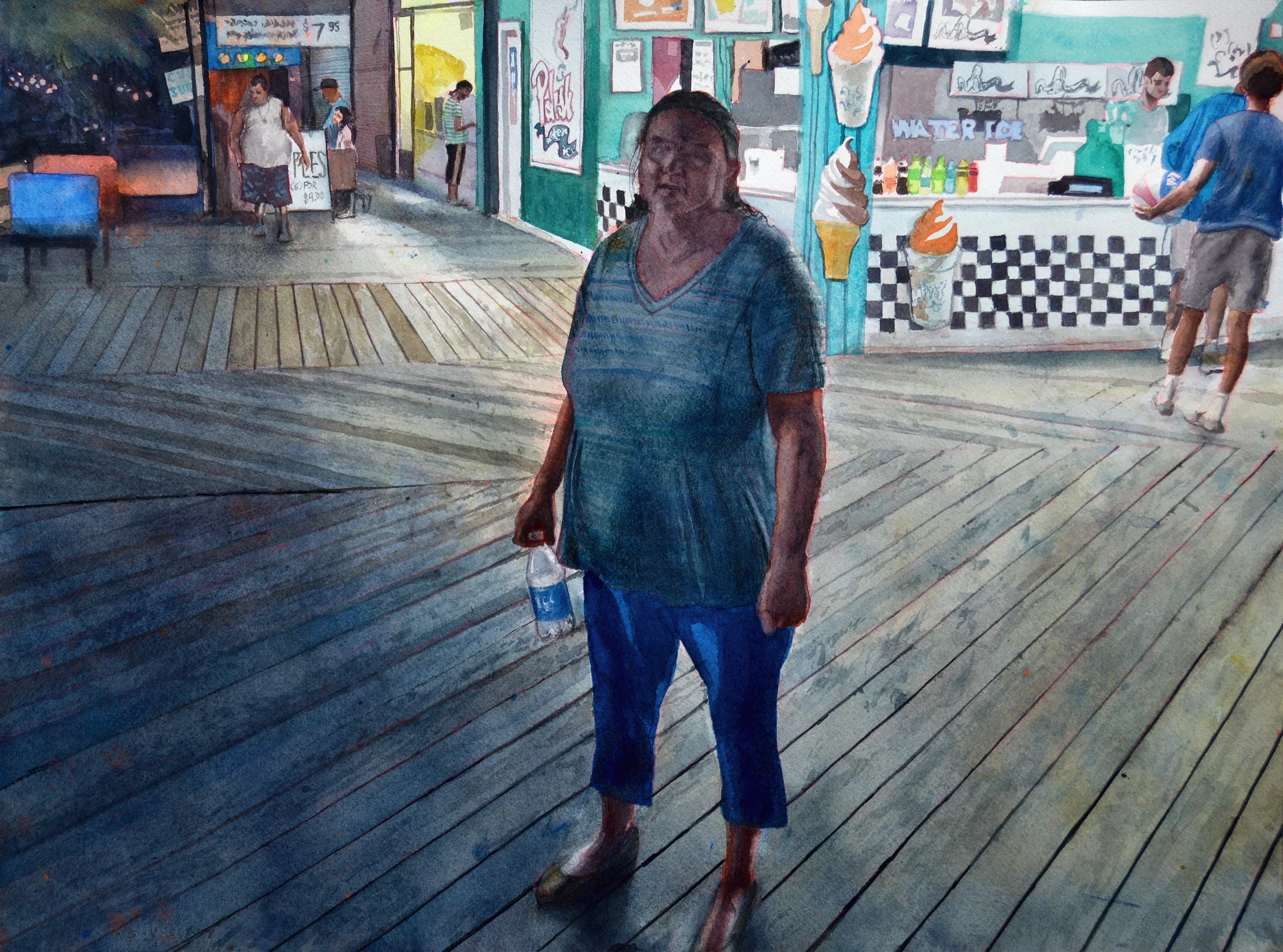
artwork by Gusky
One evening in July, on a family trip to the Olympic Peninsula, I earn a moment alone on the deck of our rented cabin tucked against the shore of Puget Sound. At high tide on this reach of coast, little rolling waves sound almost angry as they churn not sand, but stone. They seem much bigger by their clamor as they suck back, drawing cobbles and gravel into the water, then lurch forward the mixture over itself. It is an ancient practice, rock pulverized by ocean waters.
My girlfriend puts her child to bed in this din, dulled by wooden walls and well-sealed double-paned glass, and a white noise machine brought from home evens out the steady heartbeat of the waves—splash, rush, grind, beckon, splash, rush, grind. In this rare case, the electronic blends well with the natural. Well enough for a boy, thus well enough for his mother and for a guardian like me with no children of his own.
Each one of those stones, smooth and pleasant to the touch, is a weighty poem, a distillation of identity—birth and age, travel and wisdom. Each jagged rock has had its harsh edges worn down over eons of patient rigor and effort. The sea only knows how to be the sea. It does not worry or waver, it never botches a lesson, but it has its rhythms, its moods. I have watched the Gulf of Mexico writhe and toss as though it were dying of a burst appendix, have witnessed the flat, green Caribbean stretch out under the sun as though it were languishing on long holiday. Here, along the sound, the water gives birth, mother to kelp, otter, mussel, salmon—some magic of the cold, the dense dissolved oxygen, the steadiness of life near the temperate rainforest, and she trains stone to polished artifact.
The sea is raising silky little rock-children, smoothing them down with gentle, easy pressure. The stones themselves lose another edge when they crack against each other, and the waters are merely a guide, an encouragement impossible to ignore. How long would it take a new stone, freshly cracked, angry, abrasive and a little rude, to find its balanced center of gravity in these waves? Would I notice a difference in my lifetime? Maybe sooner. Maybe my girlfriend’s boy will see it by the time he is twenty.
In a few more moments, she will emerge after putting her baby down, his busy, eager mind milled by his dreams, turning today’s memories, the laughter and the too-emphatic Nos, jokes a little too harsh or mis-timed, observations both too keen and too naïve, warm hands on cold shoulders, delight at things as simple as burying my feet in the sand.
Of course the ocean is a mother, wild and wise and steady. Always willing to bend, but terrifying when pushed. And where am I in this metaphor—a childless man in love with a woman and her son? An outsider, a humble observer of kingfishers and cedar waxwings, the life she has conceived, maturing in brilliance. Here to dance in her waters and learn her undulations. To delight in her clouds and varied temperatures. I dive beneath her surface to witness the splendor of her hidden treasures. And I, too, am ground down to my smoothest self by her hand.
She exits the cabin and closes the door behind her. She drifts toward me, warm and content, her chestnut locks waving loose in the wind. I reach for her hand and she settles, the fire at her knees. I ask her, Do you think I would have made a good father? Her fingers tighten. The tide rises in her eyes. When she says, I think you would have been outstanding, I can only take her at her word.
As an outdoorsman living at the gates of the Rocky Mountains, Jason Brandt Schaefer's poetry explores the junction between the environment, politics, and family. Originally from Texas, he has been living in Boulder, CO for the better part of a decade, where he remains inspired by visits to wild spaces across the American West. He teaches courses in writing, literature, and western culture at the University of Colorado–Boulder, and performs live music on saxophone and guitar. You can find his other work in the MacGuffin, Past-Ten.com, Vol. 1 Brooklyn, Skink Beat Review, and Twenty Bellows.