Of the moment
A story about a timely matter
29, December 2025
After the Cut by J.M.C. Kane
I texted my brother one word—meathead—and he called back so quickly it was as if my phone had been waiting in his hand. It was what we had always called Rob Reiner, from the All in the Family episodes we waited each week to watch as kids, to the films that quietly furnished and subtly shaped our shared life as twins.
“Did you see it,” he said. Not a question, really. A way of placing the day on the table between us. He meant the news about Reiner and his wife.
I had. I’d seen the name first, then the second line beneath it that turned the name into a fact you couldn’t move around in your mouth until it fit. And it didn’t. The story was already everywhere, as if repetition could make the shape of it less obscene.
We didn’t speak for a moment. I could hear him breathing, and behind that the faint domestic sounds you only notice when you’re trying not to feel—some appliance doing its small job, a dog’s nails on hardwood, a house insisting on its routines even when the mind has left.
Finally, he said, “I keep thinking about the house.”
Not the films. Not the public figure. The house—the private rooms where a life is meant to be safe simply because it is offstage. The violation of that. The way it makes every sentence you might say feel rehearsed.
We did the thing men do when they are trying not to turn feeling into performance. We talked around it. We named a few titles, not in tribute but in reflex—the way you touch an object in a pocket to reassure yourself it’s still there. We remembered how his work sounded: conversation that believed in itself. Arguments that stayed in the room. Comedy that didn’t need contempt to prove it was sharp.
And then, without either of us meaning to, we reached the part you can’t make into art without feeling you’re stealing it: that this was not a career ending; it was a family catastrophe. A story with a front door. Someone else’s front door.
My brother said, “Imagine being the one who found them.”
He didn’t need to say who. The sentence already knew.
After we hung up, I kept my phone in my hand as if it were warm. I opened the article again and read a paragraph I’d already read. The words hadn’t changed; only the fact that I had returned to them had changed. The mind, when it cannot accept what it’s been given, asks for it again, as if repetition might reveal a seam—a way out.
I put the phone down.
It wasn’t moral superiority. It was simpler: the sense that continuing to read would become a kind of appetite, and I didn’t want an appetite inside this.
Of course I wanted it anyway. That was the part I didn’t say to my brother. I wanted the missing detail—the one that would make the horror legible, make it behave. I opened the article again. I followed a link. I told myself it was only to understand, only to be accurate, but what I was doing was looking for a sentence that would let me put the thing down.
I read until the words stopped being words and became material. Then I read a little more, the way you test the edge of a bruise to see if it still hurts.
In the kitchen I filled the kettle. The click of the switch was too loud. I stood there while it heated, watching the small light, and realized—absurdly—that I was waiting for it to finish as if completion were a comfort.
When the water boiled, I poured it and watched the surface of the mug darken, then settle. The mind looks for something small enough to hold. A cup. A spoon. A sentence. Anything that will agree to be touched.
The cup was not for comfort. It was for scale. It was something I could complete: boil, pour, hold, swallow. It occurred to me, standing there, that this was what my restraint had been, too—not ethics, not dignity. A way of keeping the tragedy from entering the room in full. A way to stay in charge of my own attention when everything else had already happened without anyone’s permission.
It is strange, what we call “refusal,” when what we mean is fear.
The films returned anyway, not as nostalgia but as afterimage—bright blocks of dialogue, the cadence of Rob Reiner’s America. I didn’t see scenes so much as tone: the confidence that a story could be earnest without apologizing; that a joke could be kind without being soft; that the world, though flawed, was still a place where a person might speak plainly and be answered.
A public life offers a kind of intimacy—enough to mistake for knowing. Then the news breaks, and the intimacy collapses, and you are left with the crude fact that you never knew anything at all. You only knew the work.
Even that felt altered now—not ruined, not erased, but edged, the way a familiar room looks different after someone has been ill in it. Nothing changes and everything does. You can’t unsee the body. You can’t put it back outside the frame.
I kept thinking of the cut-to-black at the end of a film—the moment when the story refuses to follow you into the hallway. In good cinema, that refusal is a mercy.
This wasn’t mercy. It was the limit of what can be shown.
That afternoon my brother texted: You okay?
I stared at the question longer than I should have. Not because I wasn’t okay. Because “okay” felt like a word from a different language, made for smaller weather.
I wrote back: Yes.
Then, because I couldn’t leave it at that, I added: You?
He answered a minute later: Yeah.
I dumped out the cold tea and pressed the switch again. The blue light came on. The mug sat where I’d left it. The counter stayed cold. Somewhere in the house a pipe clicked as it cooled—one small, involuntary remark.
And the day went on—obediently, without meaning—while my mind stayed where it was. I can’t remember if the kettle clicked off.
J.M.C. Kane is an autistic writer from England, though now claimed by New Orleans, who has spent most of his adult life trying to fit long stories into short boxes. He has worked as a paperboy, a contracting executive, and an amateur cataloguer of human regret—none of which he was formally trained for. He was formally trained as a lawyer, but he is, frankly, a better cataloguer. His fiction has appeared in almost three-dozen journals that appreciate compression—and his willingness to obey word counts. Kane was Shortlisted for the 2025 Letter Review Prize for Short-Fiction, Shortlisted for 32nd Annual Robert J. DeMott Short Prose Contest (2025), Longlisted for the L’Esprit Leopold Bloom Prize for Innovative Narration, and has recently been nominated for a Pushcart Prize.
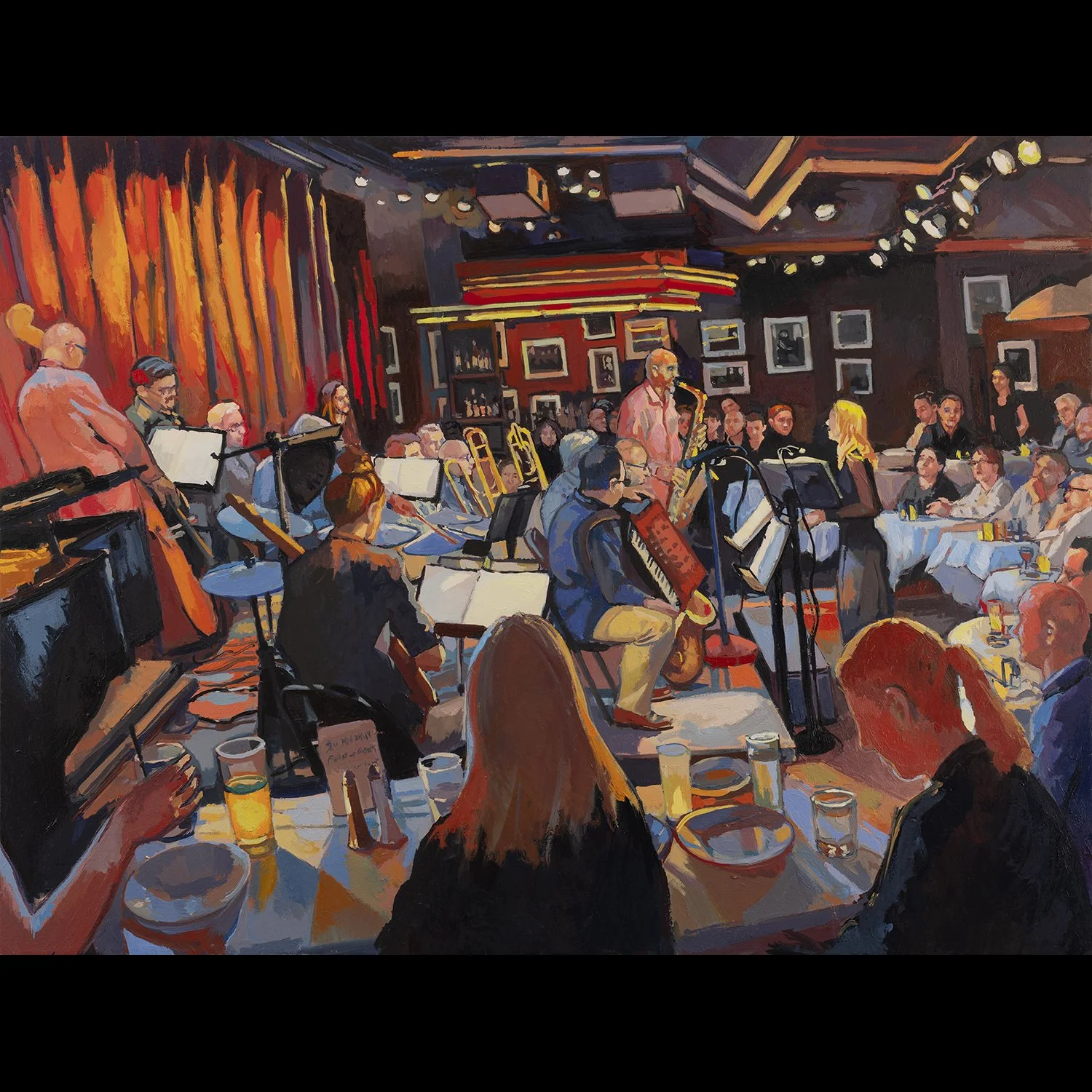
artwork by Dan Finaldi