We Need Nonfiction: A Eulogy For Books From 2014 — By Kira Córdova
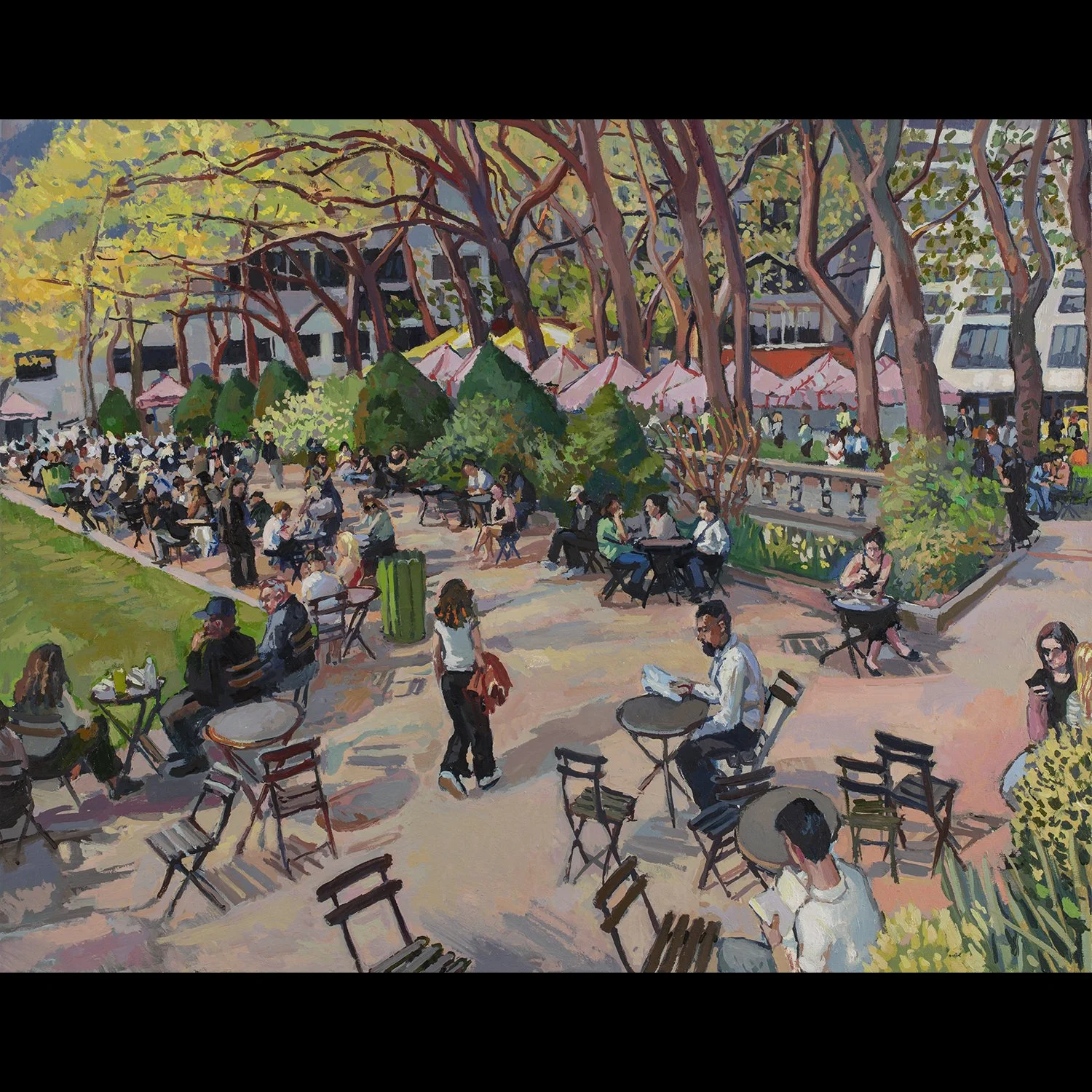
artwork by Daniel Finaldi
When I leave my job at the public library, I’ll get a tattoo of the stamp we use on withdrawn books. Yes, because I no longer work there, but also because if I were a memoir published the year I was born, they would have resold or recycled me fifteen years ago. In fact, they would have gotten rid of everyone who works here.
I’ve been a patron of my library system since I was two. When a colleague asked for help weeding nonfiction, I assumed we would look for water damage and bloodstains (it happens). But then they handed me a clipboard with a list of every book published before 2015 and instructions to remove them from the collection.
*
Our withdrawn stamp automatically self-inks from a pad encased in the handle. It makes a two-part percussive noise as the stamp makes contact with the paper and rotates back to the ink. Ka-chunk. When we stamp the front and back pages of books we withdraw, it sings a double syncopated reminder of every title that will no longer be available to library patrons. Ka-chunk. Ka-chunk.
I have culled. Billy Collins: Ka-chunk. Ka-chunk. David Sedaris: Ka-chunk. Ka-chunk. Thoreau: Ka-chunk. Ka-chunk. Five Novels of the Harlem Renaissance:1920-1930:Ka-chunk. Ka-chunk. Oprah: Ka-chunk. Ka-chunk.
Forget quilting, kombucha, or restoring antique furniture. Ka-chunk. Ka-chunk.
Colorado’s Hidden Wonders are too old to be relevant. So are most biographies of Curt Cobain. And baseball. Ka-chunk.
*
I wouldn’t advocate for computer manuals from 2003 or pre-pandemic restaurant guides. That’s called hoarding. Nor would I want to use a snowshoe guidebook from even five years ago; climate change has made those irrelevant too.
But other policies supersede the ten-and-out rule for materials that quickly become obsolete. And every item goes away if no one checks it out for two years. Yet, regardless of how many people check out nonfiction, we can’t keep it. The only exceptions are car repair manuals, state history, and philosophical and religious texts—and the last two only if they circulate.
Some libraries use age to weed for precious space. We don’t. Our nonfiction shelves are half to three quarters full. And we don’t have a collections development librarian for the municipal system at the moment, so we’re not buying any books except new bestsellers, which nonfiction usually is not.
When we cull, we sell what we can for pennies at book sales. Recycle the rest. Throw away the hardbacks. They’d clog recycling equipment. I want to smuggle each under my shirt, but what would I do with them? Even many smaller libraries have contracts with distributors that prevent them from taking donations. Every title we toss is one fewer patrons can access, one fewer in the state-wide lending system.
If we burned them, people might notice. Demand access to information in an age designed to manipulate it. But we wheel them out the back door at twilight or in the rain, and only the gaps in the shelves remember.
So if you’re a library user and don’t want your nonfiction collection going the way of the dodo, ask your library about its weeding policy. Ask to retain it. Start a campaign. Check out everything that remotely interests you, even if you don’t read it. It might not survive otherwise.
Kira Córdova is a Boston-based, Pushcart-nominated writer and sometimes tall ship sailor from the great seafaring state of Colorado working on an MFA in Nature Writing. They have work in The Poetry Lighthouse, Colorado Life, Outdoors Unlimited, and Cutthroat, a Journal of the Arts.