interview with Jamilla VanDyke-Bailey
Jamilla VanDyke-Bailey (@alli.maj) is a pro-black feminist poet and essayist and MSW student. Her poetry chapbook, “than we have been,” (Weasel Press, 2022) and her full-length book of poetry, “the womxn,” (Finishing Line Press, 2023) are currently available for purchase.
Jamilla Vandyke-Bailey writes with a fierce emotional intelligence, where the body becomes both archive and battleground, carrying the residue of inheritance, race, desire, illness, and survival. Her work moves fluidly between intimacy and indictment, collapsing the personal and political without ever sacrificing lyric precision. Whether reckoning with lineage, Black womanhood, trauma, or the strange absurdities of modern identity, she speaks with a voice that is both wounded and unsparingly clear-eyed. The result is writing that feels visceral and deeply embodied, tender one moment, razor-sharp the next, always insisting that pain, memory, and selfhood be witnessed in their full complexity.
We interviewed Jamilla about her piece, The Bailey Boys, published in The Palisades Review. Read that story hereand read her interview below.
TPR: The Bailey Boys centers on a story your narrator returns to again and again. What drew you to repetition as a structural and thematic device?
Jamilla: I used repetition for this piece because storytelling within a family is very repetitive. I’ve heard this story multiple times when I was younger, and I thought nothing of it until I had my own child. As I navigate how to raise my son best, I am forced to analyze how I was raised and whether or not it was my parents’ best, and if that even matters.
TPR: There’s a fascinating tension between humor and something more painful beneath it. How did you approach balancing those tones?
Jamilla: Growing up, I learned that people, whether you know them personally or not, don’t want to hear you whine about your trauma, regardless of how valid and integral it is to your story or the conversation at hand. But if you can make your trauma, observations, and complaints funny, you can make it palatable, and you can control the narrative, the conversation, and their impressions of you, within reason. Through trial and error, I have tried to use humor to express darker things, so that I can relieve myself of the weight of trauma and exhausting emotions without isolating myself. This is then translated on the page through quick and concise writing that mimics the way I tell stories in my regular life.
TPR: The piece plays with memory in a way that feels both vivid and uncertain. How do you think about the reliability of memory in your work?
Jamilla: Having borderline personality disorder has dulled the edges of my memory, and I have found that writing what I suspect to be true as fact comes off as disingenuous, which readers can feel within the text. However, if I write about memories as I remember them, which is through a blurry and grimy lens, I am able to focus on the emotion and the impact authentically. Also, I am very afraid that I will be publicly fact-checked and have no better option but to burst into confetti from the shame of it all. So, I try to stick to what I know and put some glitter on it.
TPR: There’s a sense that the story itself becomes a kind of inheritance. How do you think about the relationship between family, narrative, and identity here?
Jamilla: In several ways, I am a result of the stories that I have been told, and the stories that have been told about me as I grew up. I am also a result of the stories my parents told each other while they were dating and agreed to conceive me. Hearing stories of my parents’ lives before me has allowed me to better understand who they were as girlfriend and boyfriend, and I like to compare that to who they are as my parents to see how they are different, how they have grown, and how they have missed the mark in my early development. Stories reveal a lot of important information about the teller, how they view the subject, and the reader themselves, and this notion is amplified when the stories being told are about you and are being told to you.
TPR: Your voice in this piece feels very controlled but still intimate—how do you develop and sustain a voice like this across a piece?
Jamilla: I think that I have created this voice as a result of writing poetry for years. I want my poetry to make people cry, or, at the very least, hold their breath so long they can hear their own heart break. I also like writing things that are brief and to the point, like a conversation between friends, or a random thought that crosses your mind while you are doing something else. Writing with the beauty of poetry in mind, and keeping the word count low, is how I do my best writing. Or maybe I’m just lazy and lucky, I’m not quite sure.
TPR: Do you typically begin with a central image, a line, or an idea when you start writing?
Jamilla: It varies. But usually, it starts with a story that I want to tell about myself just because I think it might be interesting, or paint a better picture of who I am and who I think I am and who other people seem to think I am.
TPR: How do you approach revision, especially in a piece that relies so heavily on voice and rhythm?
Jamilla: To be honest, I don’t. I might change a few words here or there, but I often get it in the first draft, which is usually written into my Notes app or a notebook. Or, at the very least by the first time I type it out on a Google Doc. Again, I think that spending so much time writing poetry has allowed me to refine my writer’s voice in real time so that it is authentic, emotional, and transparent.
TPR: How has your approach to writing about identity or family changed over time?
Jamilla: Oh boy. When I used to write about my identity and my family, I was harsh. I’ll just say it, I was a mean bitch. I thought I was so right, and everyone wronged me, and felt the impulsive need to righteously out them for the ways that they hurt me, let me down, or allowed me to hurt myself. I was very self-important, dramatic, and desperate to be seen in a very raw way. And then, I realized that my parents are just two people who had a kid and tried their best, even if their best was not what I needed at the time. This has allowed me to write with more grace and compassion, which mirrors my development from a child to an adult child to an adult with their own child. I have found that when you tell your truth, you don’t have to be mean about it; all you have to do is tell your truth, and let people feel how they feel without your guidance.
TPR: What does a productive writing day look like for you, and has that definition changed over time?
Jamilla: The way I write is so different from when I was younger, when I would write all day and night as the angst was bubbling within me. Then I started to write when inspiration would hit, which, dealing with the current state of the world, is never because I am too busy being anxious, irritable, and sad. Over the last year or so, I have started welcoming inspiration and writing when it hits. I take in a lot of media (social media, memes, podcasts, Twitch streams, novels, murder mysteries, poetry, interviews, TV shows, movies, etc.) and allow myself to feel something in response. Whether it is what is being said, or what is not being said, that I think should be said. I’m not in a place where I can sit and write whenever I want to, nor do I think I have that many important things to say all the time, but I have found a great balance in devouring art and ideas, and then giving myself the time to write when I feel moved to do so. It’s decreased my productivity, which shows in the drastic decrease in my work getting published, but I have decided to find peace in this new way of living and creating.
TPR: What are you most interested in exploring in your writing right now?
Jamilla: I am not sure, and it goes back and forth. Right now, I am working on a Marilyn Monroe project using her book Fragments. It is an Ode to Marilyn, a dissection of Marilyn, and a conversation about my, a Black girl, becoming obsessed with one of the most captivating women of all time, who was White and beautiful and thin and nothing like me. After this project, I am going to use Alua Arthur’s Briefly, perfectly human to write about my deep-rooted problems with death, dying, and grief. I am considering using important moments in her book to jump-start my own reflections, or using her work as a death doula to guide a novella-length project. There are so many more ideas, and they keep racking up; it’s just about being disciplined in my writing efforts and being kind to myself.
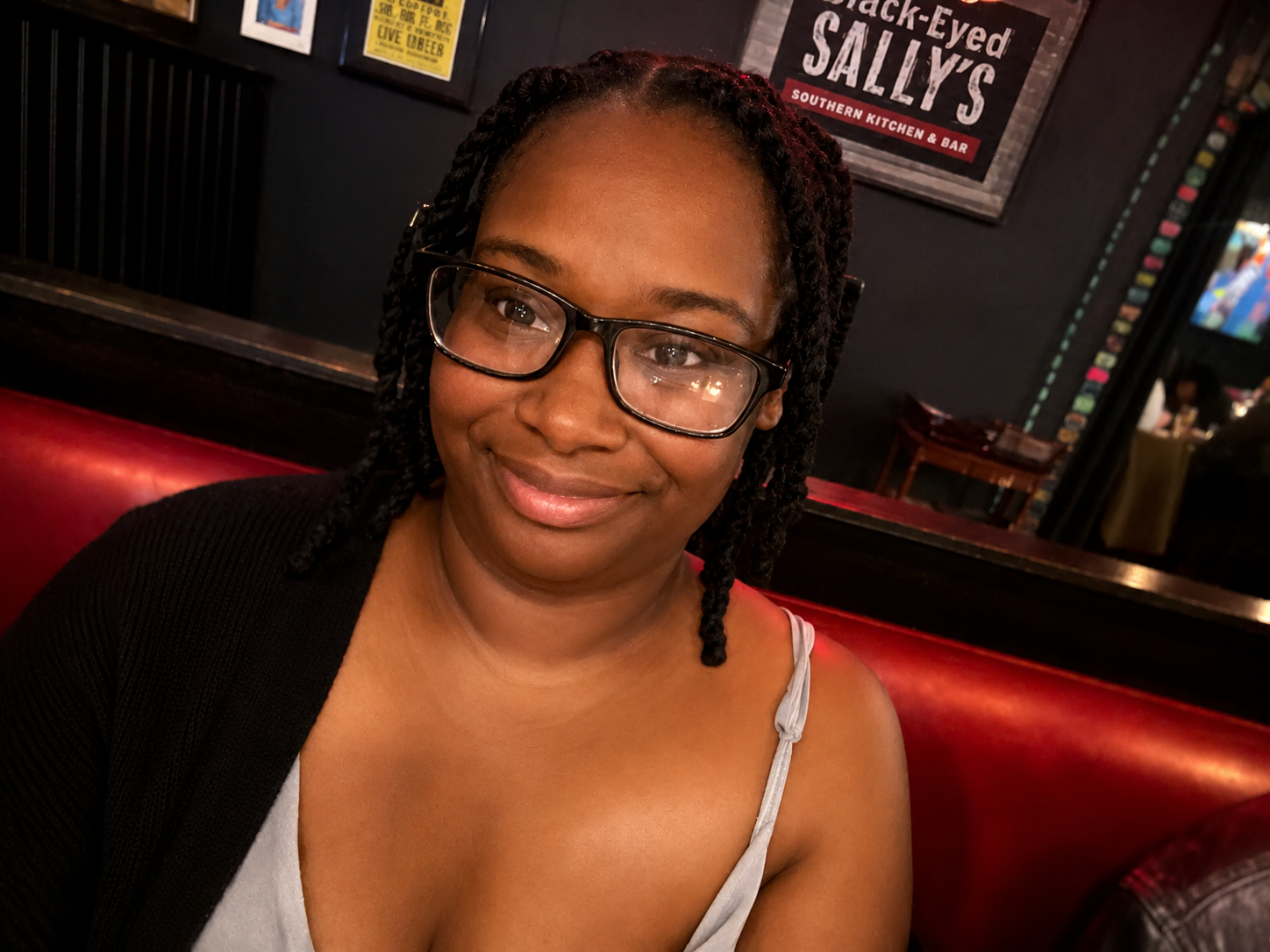
Jamilla VanDyke-Bailey